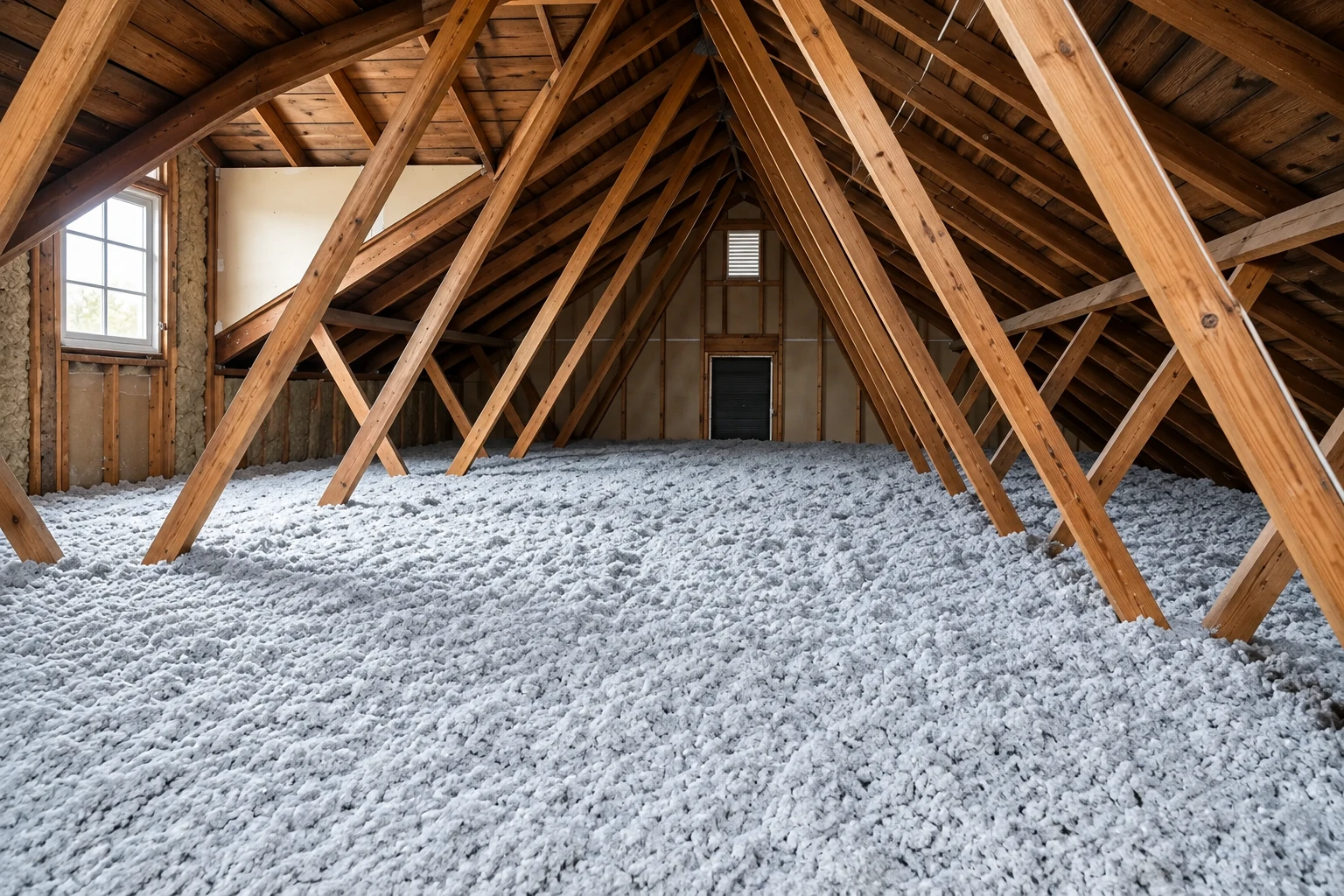
Blown-in insulation in Vacaville CA - even attic coverage with the vents left open
Hot upstairs or a drafty bedroom? We seal the attic's gaps first, then blow in fill that covers the whole ceiling evenly.
Is blown-in insulation the right fix for your Vacaville attic?
Blown-in insulation is loose cellulose or fiberglass that we blow across the attic floor of your Vacaville house, so the ceiling does a better job of keeping summer heat out and winter heat in.
Most calls start with a bedroom that's hot upstairs by afternoon, a cold room over the garage or a power bill that won't come down, and then a look in the attic shows insulation that's thin, patchy or pushed aside. Sometimes the fix is more fill. Sometimes it's sealing a few gaps first, and I'd rather tell you that than sell you a bigger job.
The price moves with the size of the attic floor, how many inches are already up there and what shape they're in, how much sealing the attic needs, how many lights and flues need clearance, and how hard the space is to move around in. The schedule turns on whether a permit is part of the job and whether anything has to come out first, and your written estimate gives you the figure and the plan for your house.
- Covers the attic floor of a vented attic, out to the eaves and into the tight corners.
- Loose cellulose or fiberglass, blown through a long hose from a machine parked outside your house.
- Air sealing, eave baffles and clearance around lights and flues are part of the job we quote.
What happens when you call about blown-in insulation in Vacaville?
I look at every attic myself before anyone quotes a number, and our installers do the work after that. Here's how it goes from your first call to the walkthrough at the end.
Call or send the form
Call (707) 452-3285 or use the form, and we'll set a time for me to come out. It helps to have the attic's rough square footage handy, plus a note on any recessed lights and what insulation is up there now.
I look in the attic
I get up into the attic myself, check how many inches are there, where air is leaking and which lights need room, and before I leave I tell you what I'd do first and why. You then get a written estimate that spells out the work, so you can compare it and decide on your own time.
Our installers do the work
Our crew handles the sealing, the clearances and the blowing in the order laid out in your estimate. Clear a path to the attic hatch so they can get up there without moving your things.
We look it over together
Before we call it done, I go through the attic with you so you can see the depth across the floor and the vents left open at the eaves. Satisfaction guaranteed.
What a blown-in attic job looks like up close
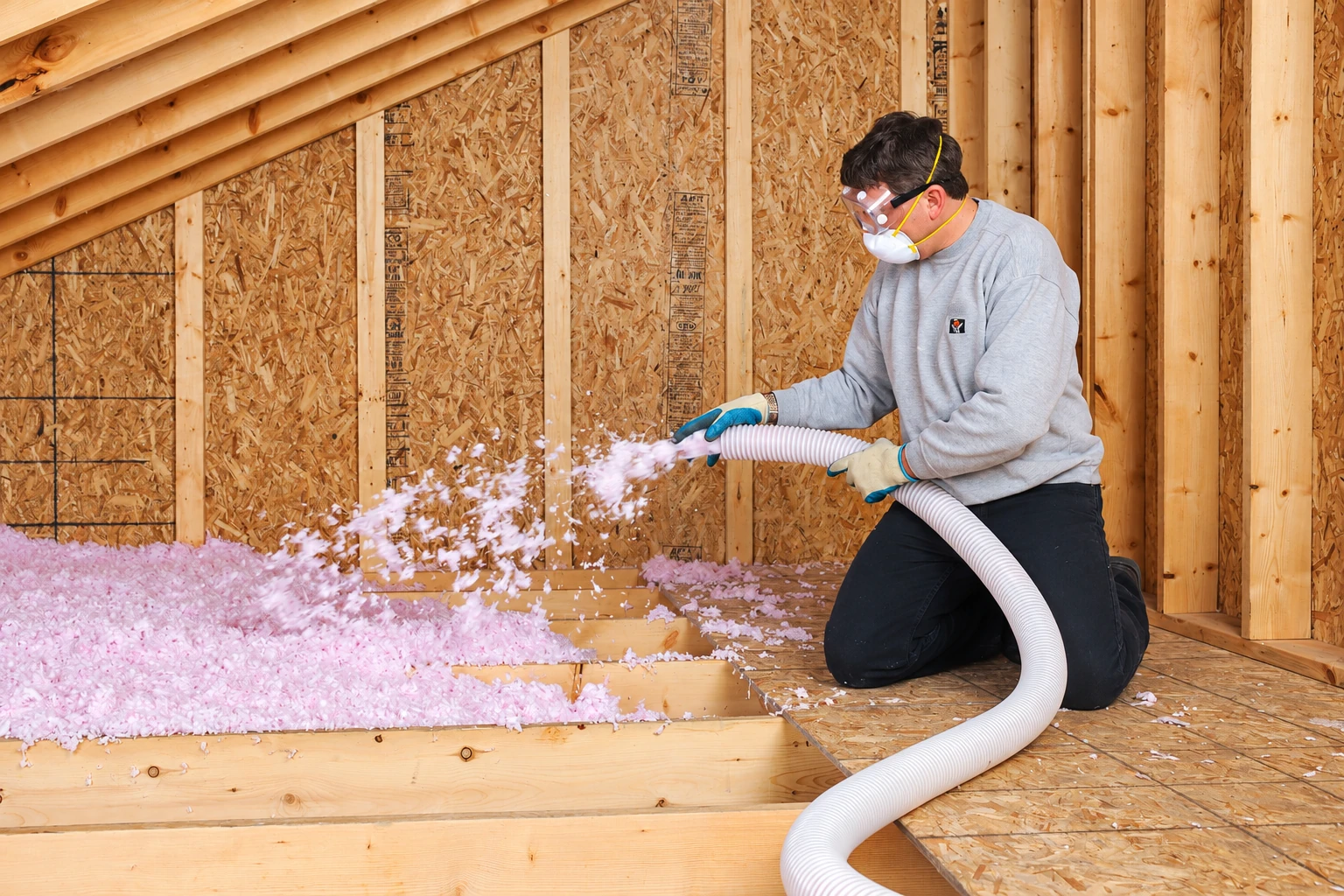
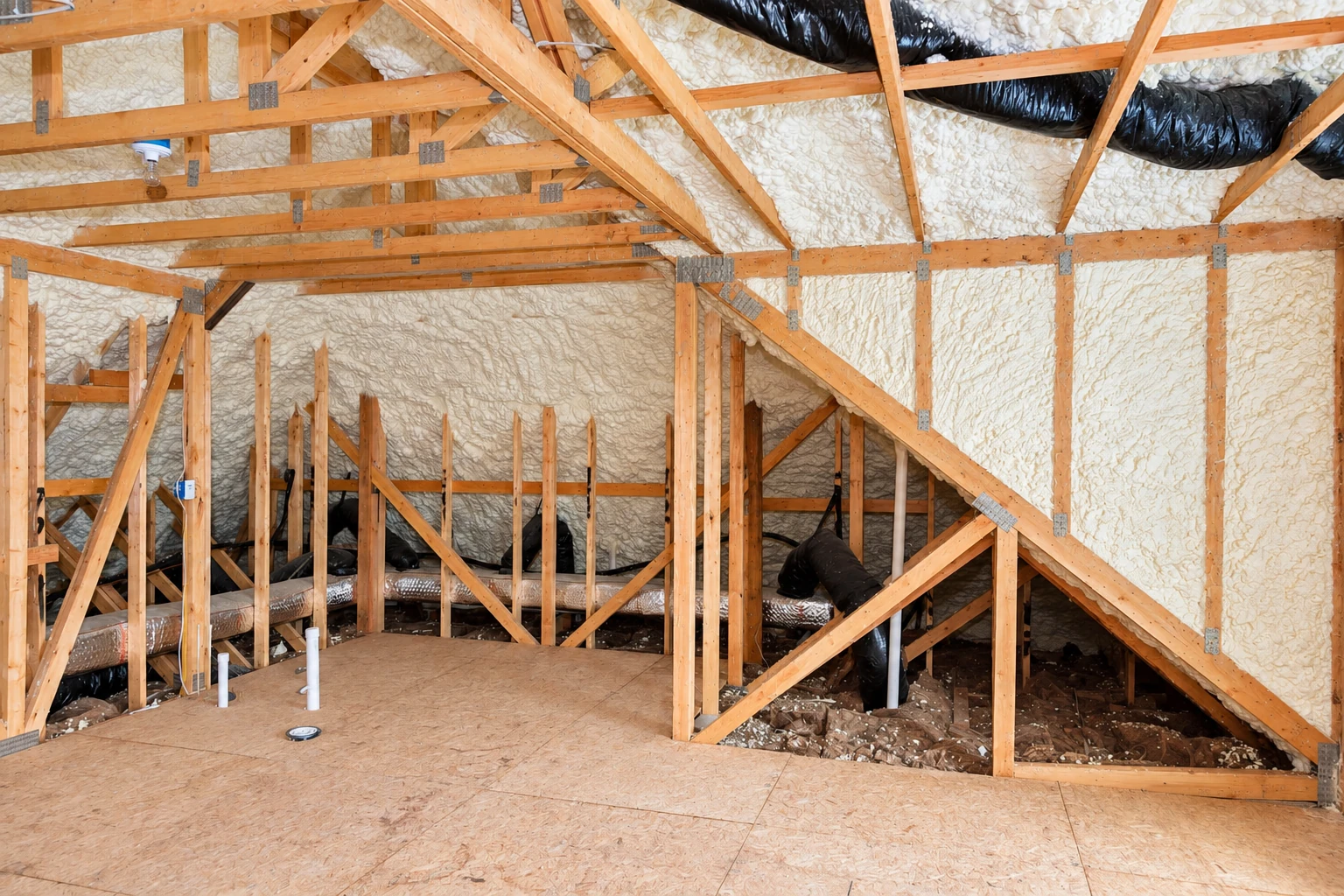
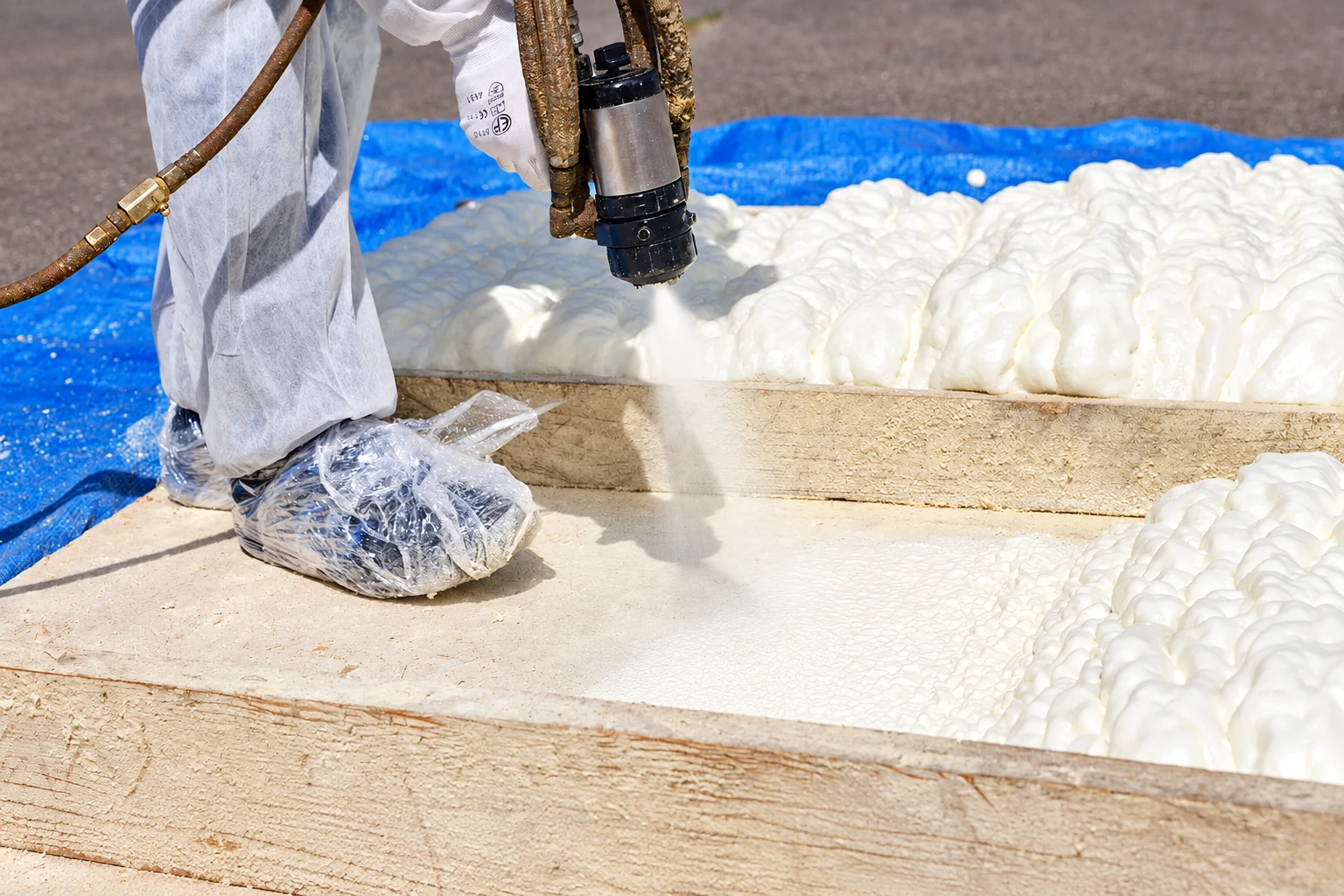
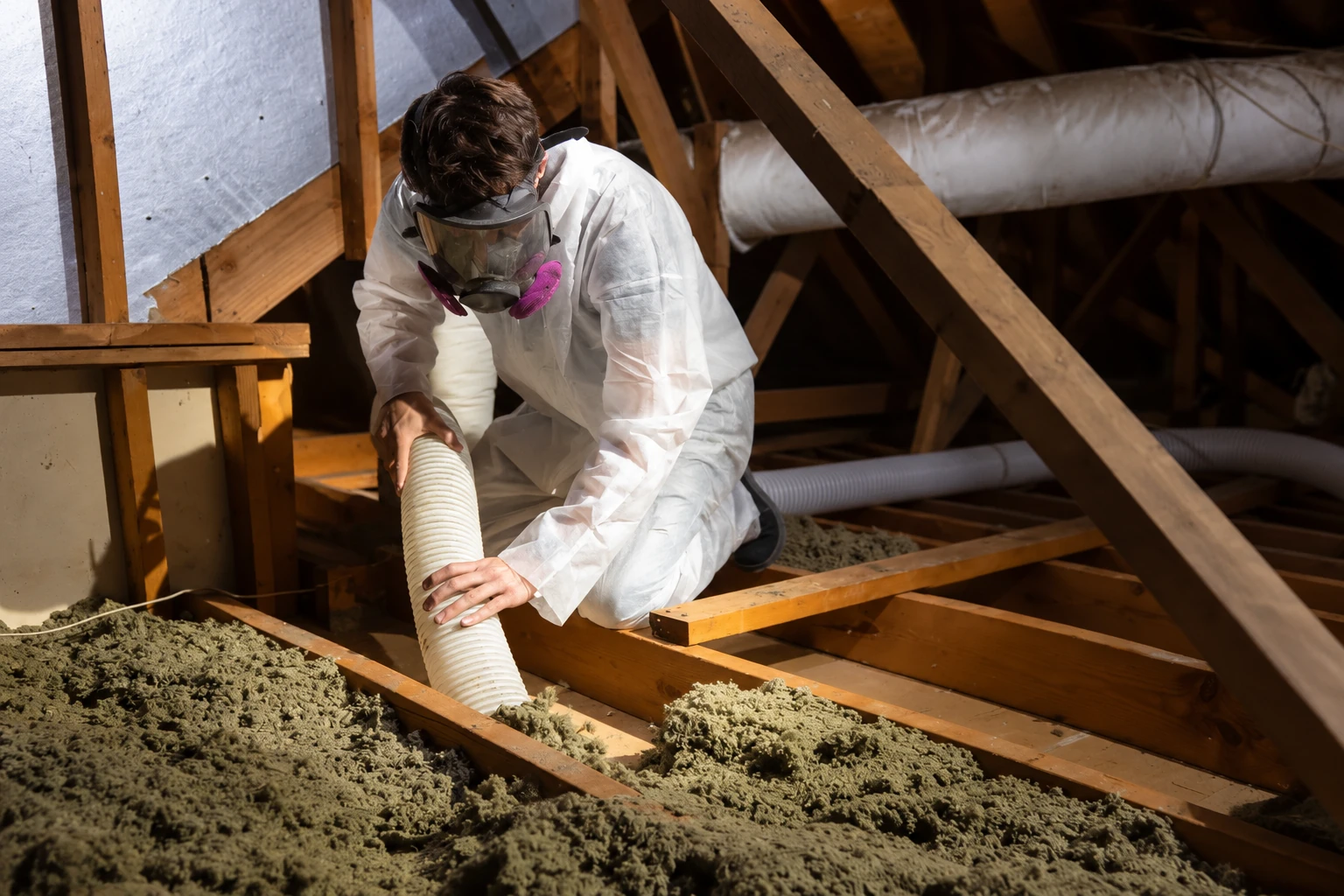
These photos show the kind of attic work blown-in insulation involves, from the hose and the fill to the baffles at the eaves. They're examples of the trade, so ask at the estimate what your own attic needs.
A worker in protective coveralls sprays loose white insulation through a hose across an attic floor beneath exposed rafters.
An unfinished room has pale spray foam insulation between exposed wooden studs and across the ceiling.
Spray foam insulation covers the underside of a crawl space floor around a large metal duct and exposed wood joists.
Unfinished room with fiberglass batts fitted between wall studs and ceiling joists, plus a window and exposed wiring.
Worker in protective coveralls applies spray foam along the lower wall of a concrete enclosure with a hose-fed gun.
Basement walls have thick fiberglass batts fitted between wooden studs beneath exposed ceiling joists and a metal duct.
Get a written estimate for blown-in insulation in your attic
Send the form and we'll reply within one business day to set up a free visit, when I come out myself and look in your attic. You get a written estimate after, with no pressure and no obligation.
(707) 452-3285Common questions about blown-in insulation in Vacaville
These are the questions people ask me most when they're weighing blown-in insulation for the attic. If yours isn't here, call (707) 452-3285 and ask me directly.
Is blown-in insulation better than batts for an attic?
Usually, yes. Blowing loose fill is usually less expensive than laying batts and gives better coverage, whether the fill is fiberglass, rock wool or cellulose, because it doesn't leave seams between pieces. Quotes still vary, so compare what each one includes.
How much does blown-in attic insulation cost per square foot?
Across the US, installing blown-in attic insulation usually costs about $4 to $7.50 per square foot. That's a national range, so where your attic lands depends on what I find up there, and your written estimate gives you the number for your house.
Why seal air leaks before blowing in attic insulation?
Because most insulation doesn't stop air, so a gap left open keeps pushing attic air into your rooms right through the new fill. The usual leak spots are holes for wiring and plumbing, light fixtures, bathroom fans and the hatch, and it makes sense to seal them in the same job while the attic's open.
How do I know if my recessed lights can be covered with insulation?
Look for an IC rating, the mark that says a fixture is made to touch insulation, usually printed on a label inside the housing. Lights without it have to stay clear of insulation because contact is a fire hazard, and each one leaves a bare patch of ceiling, so I check every one at the estimate.
What causes blown-in insulation to settle?
Fill blown in too loose settles over time and leaves thin spots and voids. It should go in dense enough to resist that, at an even depth across the whole ceiling, so ask any installer how they get there, and I'll walk you through how we do it.
Can a handyman install blown-in insulation without a license in California?
Only on a small job. California lets an unlicensed person take on minor work up to $1,000, and only when the job needs no permit and they have no employees. Past that, insulation work takes a licensed contractor, and the state has its own class for it. We're licensed and insured.
Blown-in insulation permits in Vacaville and nearby cities
Vacaville issues an instant express permit for like-for-like attic insulation replacement, not new installs, and when your job needs a permit we file it and book the inspection. We do the same work in Fairfield, Dixon and plenty of nearby cities.