
Basement insulation in Vacaville CA - a warmer basement with walls that stay dry
Cold floors over the basement, or a chilly, damp space downstairs? We insulate the walls or the floor above, whichever fits how you use it.
What's involved in insulating a basement in Vacaville?
Basement insulation in Vacaville puts a layer of insulation between your living space and the cold foundation, on the basement walls if you'll use the room, or between the floor joists above it if you won't.
Most calls start with cold floors in the rooms over the basement, a musty smell down there, or plans to turn the space into a room you'll actually use. The price moves with the square footage, whether we do the walls or the floor above, and whether the walls are bare or already finished. The schedule mostly waits on any leak or damp spot that has to be fixed first. I give you the figure for your basement in a written estimate after I've seen it.
I sold insulation before I installed it, and I'd rather lose the job than talk you into more than your house needs, so if the floor above is enough, I'll tell you. When the old insulation down there is wet or ruined, we pull it out first with our insulation removal work.
- We insulate bare concrete walls, walls that are already finished, or the floor framing over the basement.
- Old insulation that's soaked or full of droppings comes out first, so the problem doesn't stay behind.
- Gaps around pipes, wires and the rim of the floor get sealed before any insulation goes in.
What happens after you call us about your basement?
I look at every basement myself before anyone quotes a price, and our installers do the work after that. Here's how it goes, from your first call to the walk-through at the end.
Call or send the form
Call (707) 452-3285 or use the form, and we'll set a time for me to come out. It helps to tell us the rough square footage, how you'll use the space, whether the walls are bare or finished, and whether a water heater or furnace sits down there.
I look at the basement
I come out myself, check the walls, the floor framing above and any damp spots, and tell you before I leave what I'd do first and why. Then you get a written estimate with the method, the price and anything that has to be fixed first, so you know the number before anything is booked.
Our installers do the work
Once you say go, our installers protect the area and do the job the estimate describes. If they open a wall and find something new, like a leak, we talk with you before anything changes.
We look it over together
When the crew is done, I come back and go over the work with you before we call it finished. That's a good time to ask about anything you see down there.
What basement insulation looks like on the job
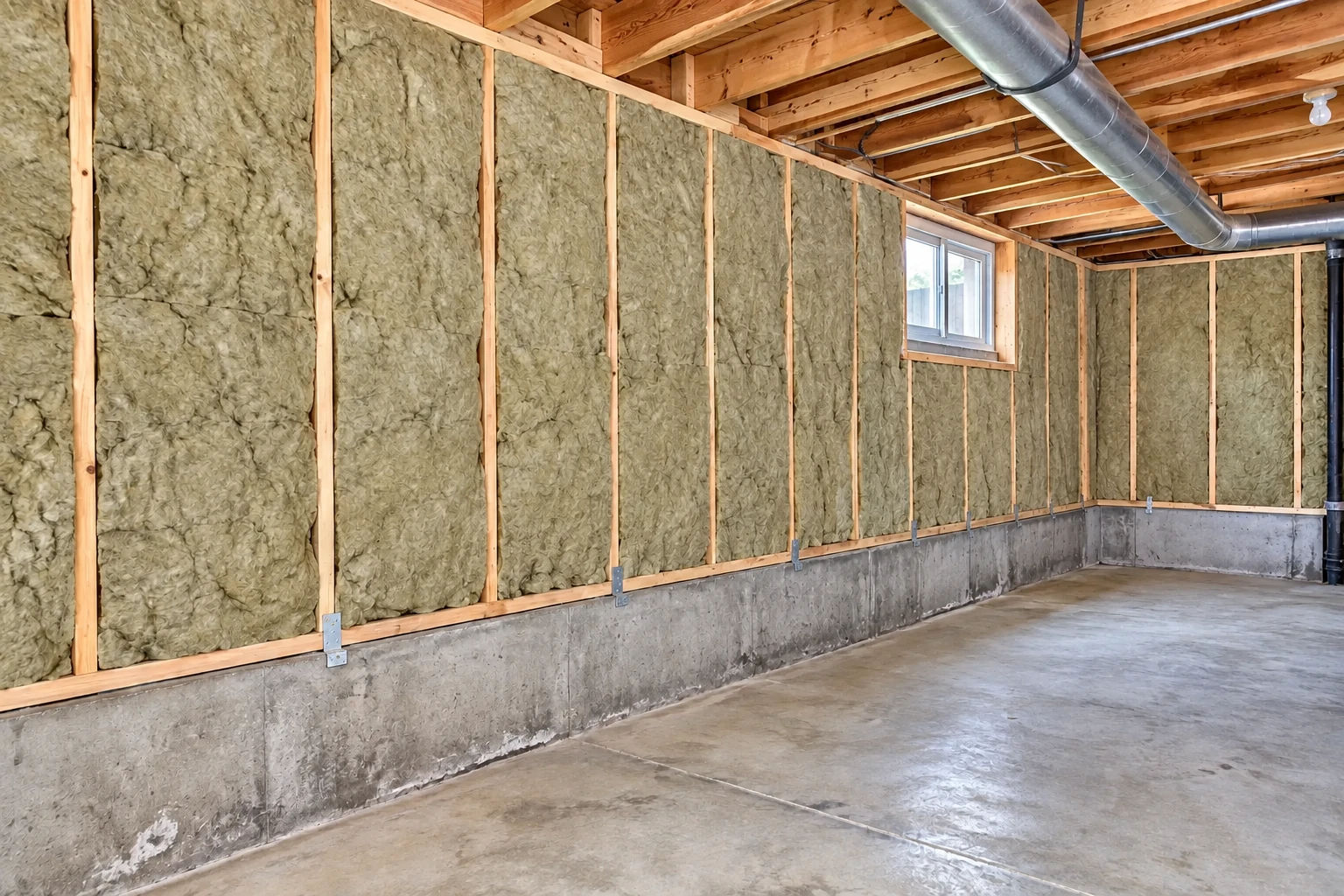
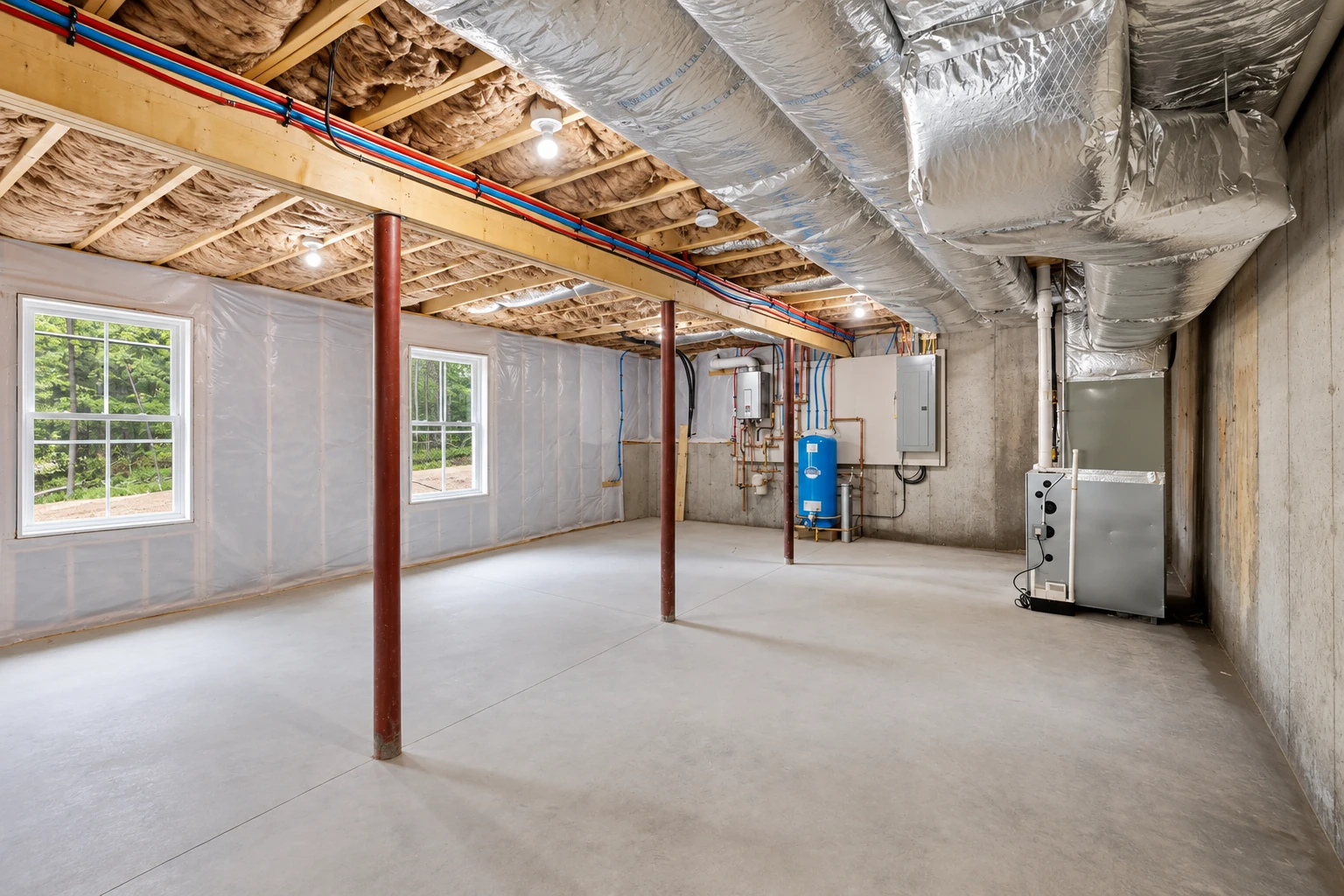
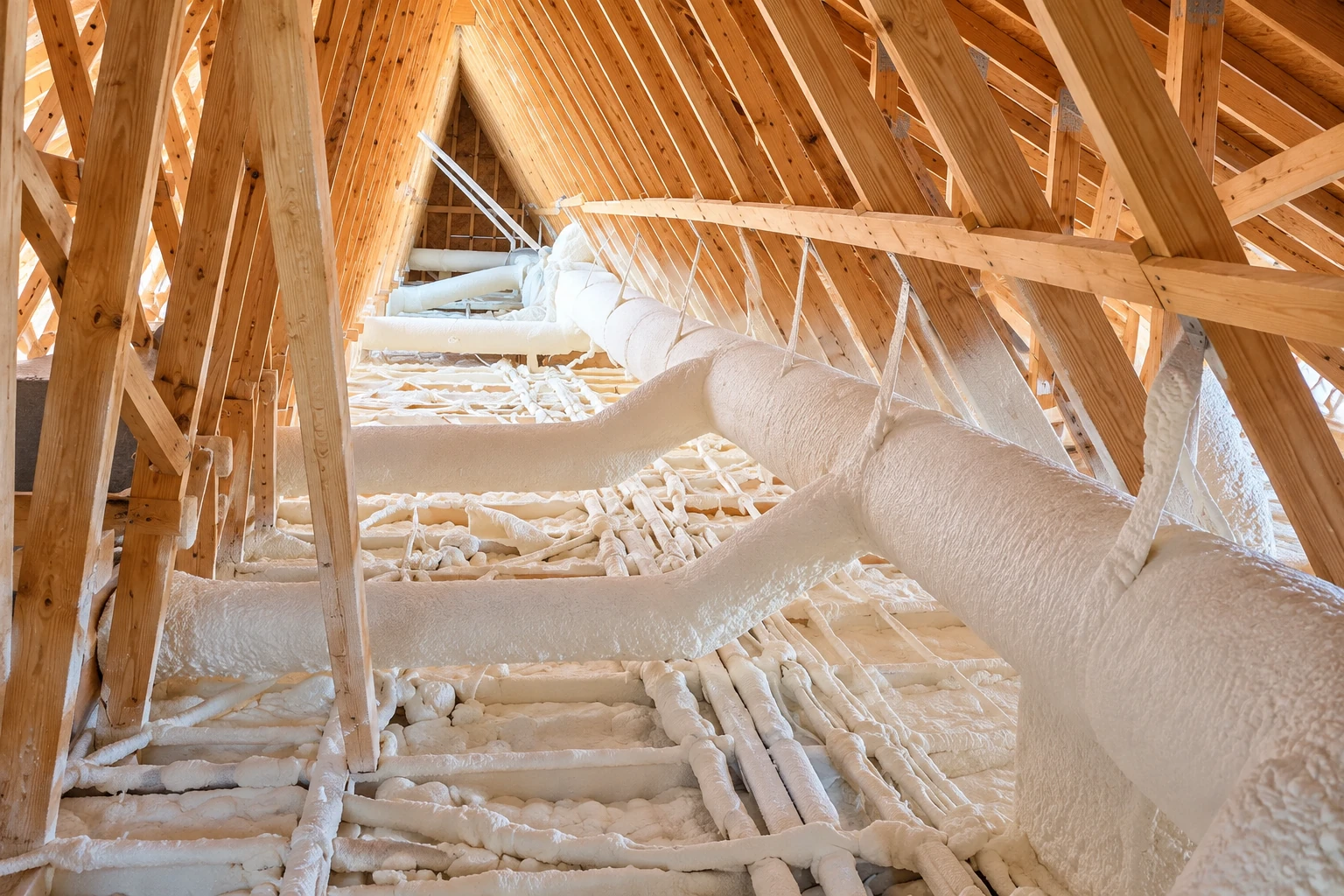
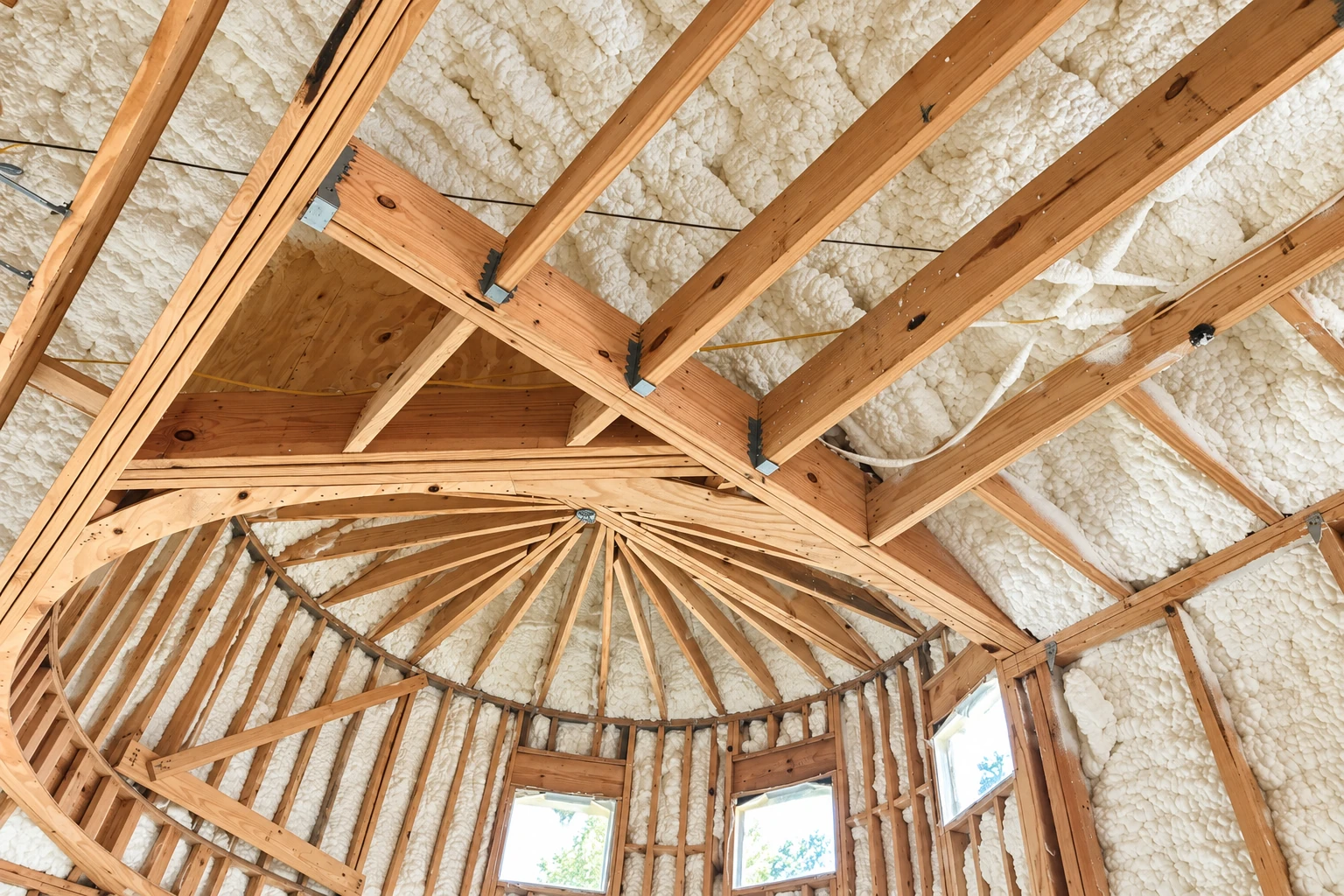
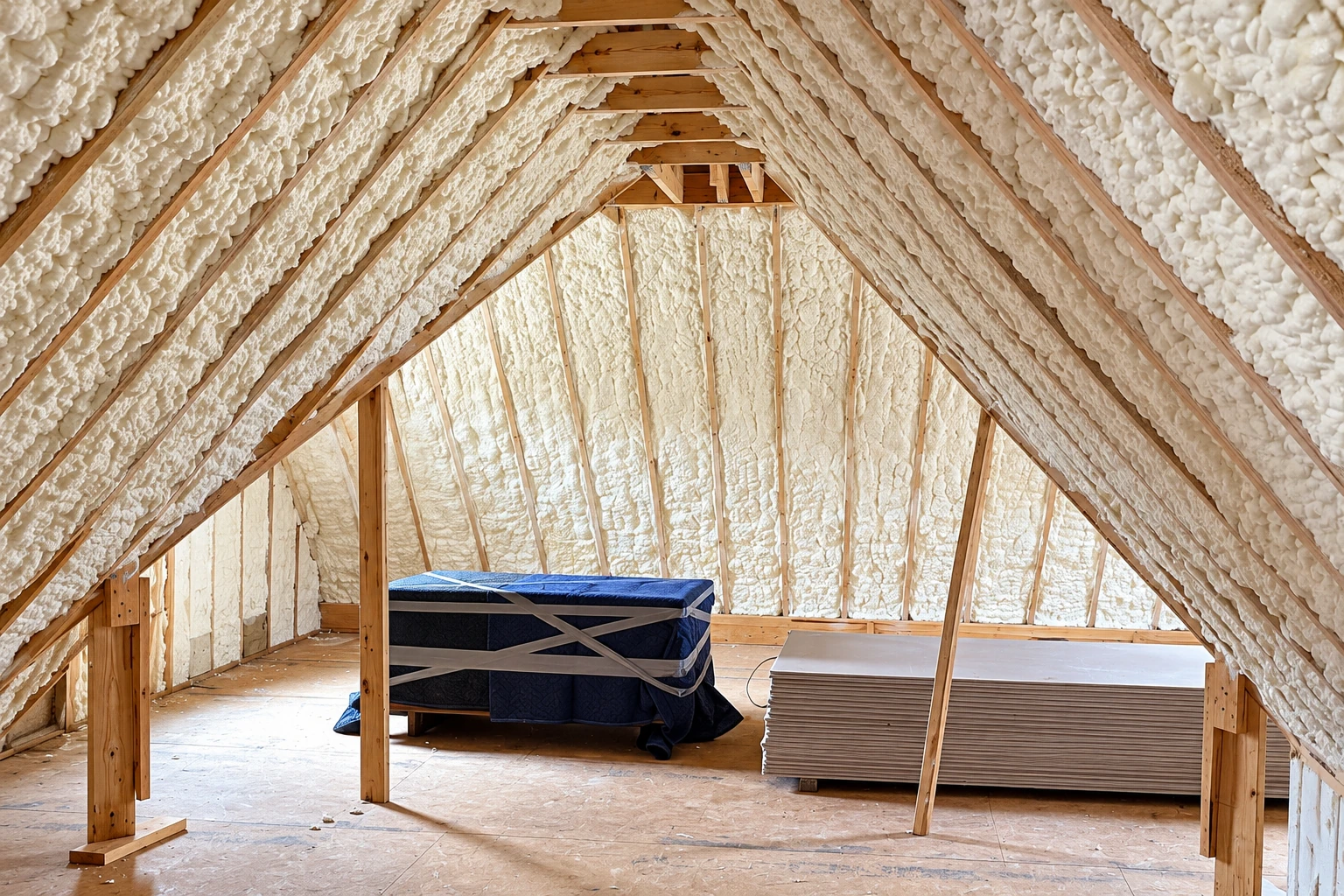
These photos show common ways basements get insulated, from foam sprayed on bare concrete to batts tucked between the floor joists overhead. They show the work in general, not particular jobs of ours.
A worker in protective coveralls sprays loose white insulation through a hose across an attic floor beneath exposed rafters.
An unfinished room has pale spray foam insulation between exposed wooden studs and across the ceiling.
A kneeling worker sprays pink blown-in insulation through a hose across an unfinished attic floor.
Exposed attic rafters and walls are coated with pale foam insulation, with ducts and framing visible.
A worker in protective coveralls vacuums loose attic insulation through a hose among exposed wooden rafters.
Spray foam insulation covers the underside of a crawl space floor around a large metal duct and exposed wood joists.
Get a written estimate for insulating your basement
We'll reply within one business day to set up a free on-site visit, and I'll come out to look at the basement myself. You get the estimate in writing, with no obligation to go ahead.
(707) 452-3285Questions Vacaville homeowners ask about basement insulation
These are the questions I hear most from people deciding what to do with a basement. If yours isn't here, call (707) 452-3285 and ask me.
Should I insulate my basement walls or the floor above it?
Insulate the walls if the basement will be heated and cooled as part of the house, and the floor above if it won't. Walls generally perform better but usually cost more, because they take more insulation and more labor, so some owners of existing homes go with the floor to save money. If you're only storing boxes down there, the floor is usually where I'd start.
How much does basement insulation cost in Vacaville?
Across the US, insulating a basement usually costs about $4.40 to $6.40 per square foot, which is the going rate for the work, not our quote. Your number moves with the square footage, walls versus floor, bare versus finished walls, and any water problem that has to be fixed first. I put your figure in writing after I've seen the basement.
Who can install insulation in California?
A contractor licensed by the Contractors State License Board in the insulation and acoustical classification, which covers installing any insulation for temperature or sound control. A general building contractor can take the main contract if it holds that specialty classification too, or it can hand the insulation to a licensed specialty contractor. We're licensed and insured.
What should be checked in a basement before it's insulated?
Federal building guidance calls for checking for asbestos, lead paint, water leaks, moisture and pest damage, and giving the owner a list of problems so repairs can be planned before the work. If a natural-draft water heater or furnace sits in the basement, the same guidance calls for a combustion safety test, which checks that exhaust isn't flowing back or spilling into the house.
How do I keep an insulated basement wall from trapping moisture?
Leave plastic sheeting and foil-faced boards off the room side of fiber insulation, because they can trap moisture inside the wall. For walls below ground, federal energy guidance points to kraft-faced fiberglass batts, the kind with a paper backing, or latex paint on the drywall, since both slow moisture without sealing it in.
What is the best way to insulate the basement walls of an existing house?
In most existing homes, from the inside of the foundation walls. Insulating the outside usually only makes sense in new construction, because digging out around the foundation costs too much to do just for insulation. The exception is when you're already digging for foundation repair or drainage.